Backcountry Food Storage in Bear Country: The Complete Protocol
Food storage in grizzly and black bear country — bear canisters, PCT hangs, bear boxes, and camp hygiene protocols for s…
· 8 min

From the Brooks Range to the Laurentian Shield — field reporting on the landscapes and creatures that define North America's last wild places.
Explore the JournalsThe Grizzlar is a reading site about North American wildlife and the country it lives in. Its material is organised into five journals — grizzly bears, national parks, wildlife photography, bear safety and Canadian wilderness — and each is written as a standing reference rather than a news feed, so the guides are meant to stay useful between visits instead of being replaced every week.
The five subjects are connected rather than parallel. A question that starts with an animal usually ends in a place, and a question that starts with a place usually ends in what to carry and how close to stand. The grizzly bear journal covers biology, behaviour and conservation; the national parks journal covers where those animals can actually be seen, in which valleys and in which months.
The bear safety journal handles the part that matters before anyone leaves the trailhead — food storage, canisters and hangs, spray selection and the protocols that go with them. The wildlife photography journal covers field craft from both directions: equipment, settings and autofocus behaviour on one side, and distance, disclosure and the limits of acceptable practice on the other. The Canadian wilderness journal covers the remote country itself, from the coastal temperate rainforest to the sub-Arctic north.
Inside each journal the individual guides go further than the overview. They set out specific locations, access routes, seasons and figures where the subject has them, and they link across to one another wherever a question crosses a boundary — the salmon-season article points to photographic distance, the habitat article points to the parks that protect the corridors between populations.
Readers arriving with a specific question are usually best served by going straight to the relevant journal listed below. Readers arriving without one can start anywhere, since every journal opens with an overview before its individual guides.
As the October light filters low across the Bow Valley, the silhouette of a grizzly bear moving through the willow brush is a sight that stops most hikers in their tracks. In the Canadian Rockies, this species is not merely a resident of the landscape — it is the landscape's most reliable barometer.
Conservation researchers have spent decades tracking the movement corridors of the northern Rocky Mountain grizzly population. Their findings suggest that the bears' range is shifting in response to changing snowpack patterns, earlier berry seasons, and the altered timing of salmon runs in tributary systems.
Understanding these shifts is central to the mandate of parks managers across both Banff National Park and Jasper National Park — two of the largest protected areas in the Canadian Rockies, and home to one of the highest densities of grizzly bears on the continent.
Food storage in grizzly and black bear country — bear canisters, PCT hangs, bear boxes, and camp hyg…
Canadian WildernessYukon wilderness guide — Kluane National Park, the Dempster Highway, Dall sheep, grizzly bears, cari…
Wildlife PhotographyWildlife photography ethics — distance requirements, no-baiting rules, drone regulations, and how to…
Biology, behavior, conservation, and the ecology of the North American brown bear.
Read JournalDetailed guides to the national parks of Canada and the United States.
Read JournalField craft, equipment, ethics, and techniques for photographing wild animals.
Read JournalEvidence-based guidance on travelling safely in grizzly and black bear country.
Read JournalIn-depth exploration of Canada's most remote and spectacular wild areas.
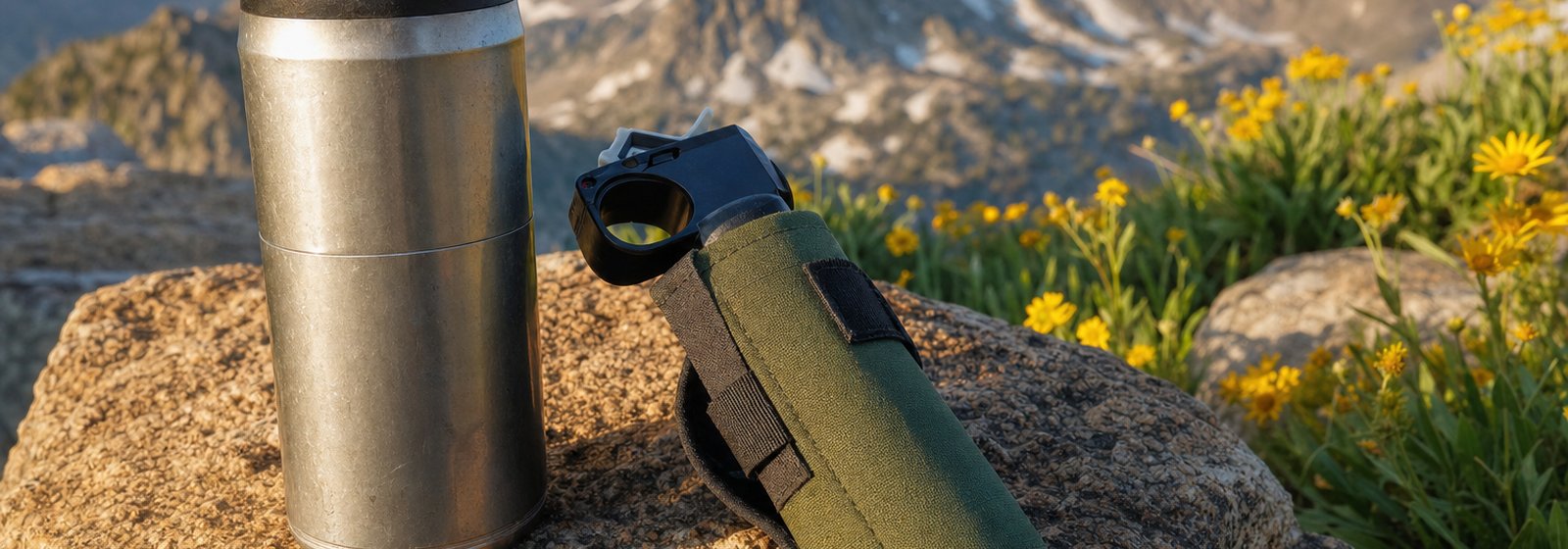
Read JournalFood storage in grizzly and black bear country — bear canisters, PCT hangs, bear boxes, and camp hygiene protocols for s…
Yukon wilderness guide — Kluane National Park, the Dempster Highway, Dall sheep, grizzly bears, caribou, wolves, and sel…
Wildlife photography ethics — distance requirements, no-baiting rules, drone regulations, and how to evaluate your pract…
A guide to the Great Bear Rainforest — spirit bears, grizzlies, humpback whales, and 6.4 million hectares of remote coas…
How to find Yellowstone's wildlife — Lamar Valley wolf packs, grizzly bears in the Hayden Valley, and bison on the North…
How salmon runs transform grizzly bear behaviour and body condition each autumn — plus the BC and Alaska rivers with the…